
UAV Innovations
Advanced UAV Research, Engineered for Defense and Civil.
2 active R&D programs
Class I to long-endurance
Made in Canada
Defense · Civil · Environmental




Overview
A Canadian UAV R&D house, working at the intersection of aerospace and advanced engineering.
Web4You’s UAV Innovations program covers two parallel tracks: a field-tested attritable interceptor platform built for time-sensitive deployment, and a long-endurance hydrogen-powered platform under feasibility study for civil and government applications. Both projects share a common engineering foundation — modular airframe design, custom electronics, AI-capable payloads, and the prototyping discipline to move quickly from concept to validated prototype.
2
Active UAV programs
325km/h
Bird of Prey burst speed
1000km
Hexacopter target range
6-8hr
Hexacopter endurance
Innovation
Advanced UAV Concepts in Development
We’re exploring a new generation of unmanned aerial platforms — uniting aerodynamic engineering, modular payload design, intelligent navigation, and resilient communications. Each concept below represents technology in active development, shaped by real-world operational, industrial, and research needs.
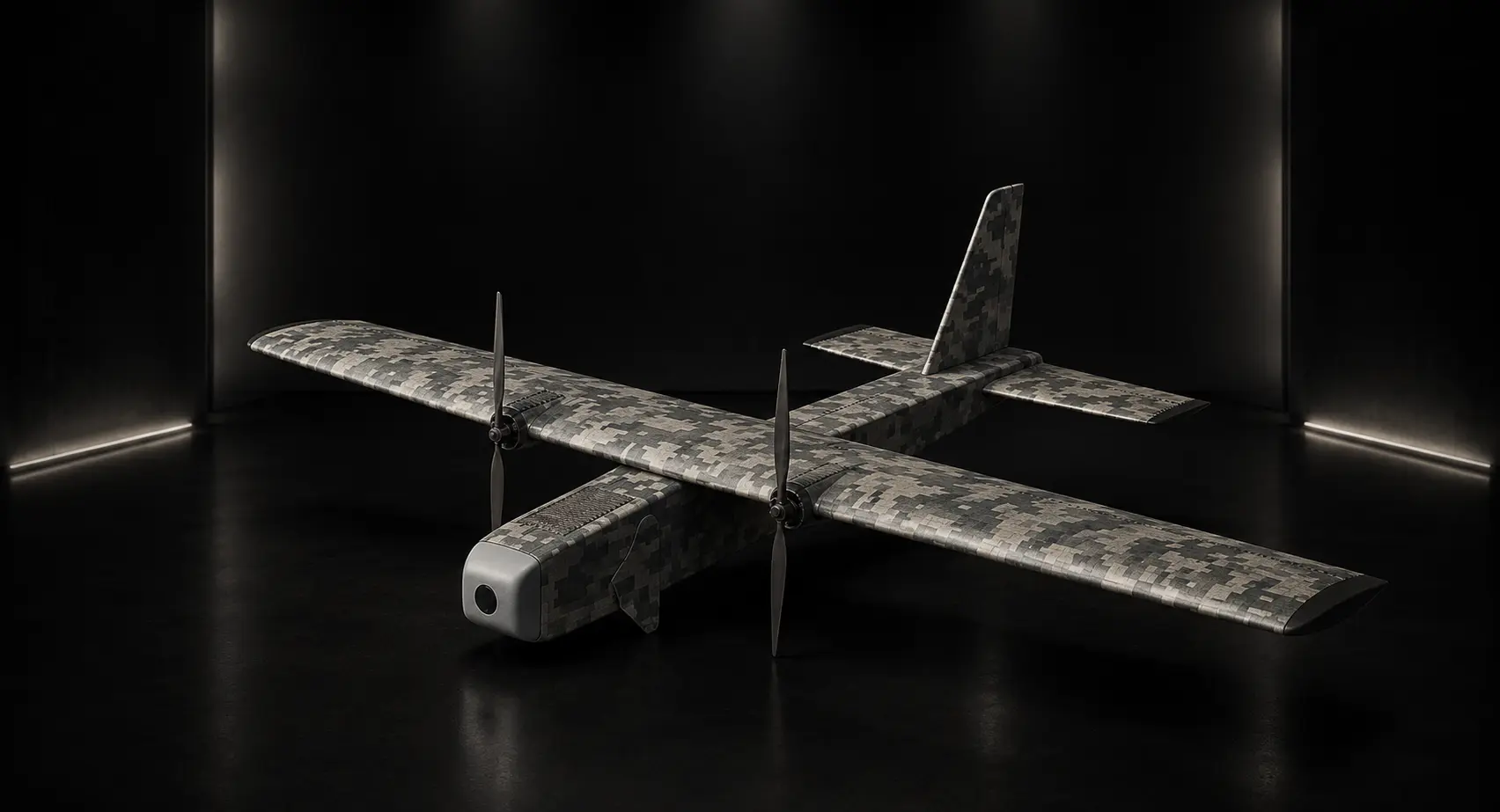
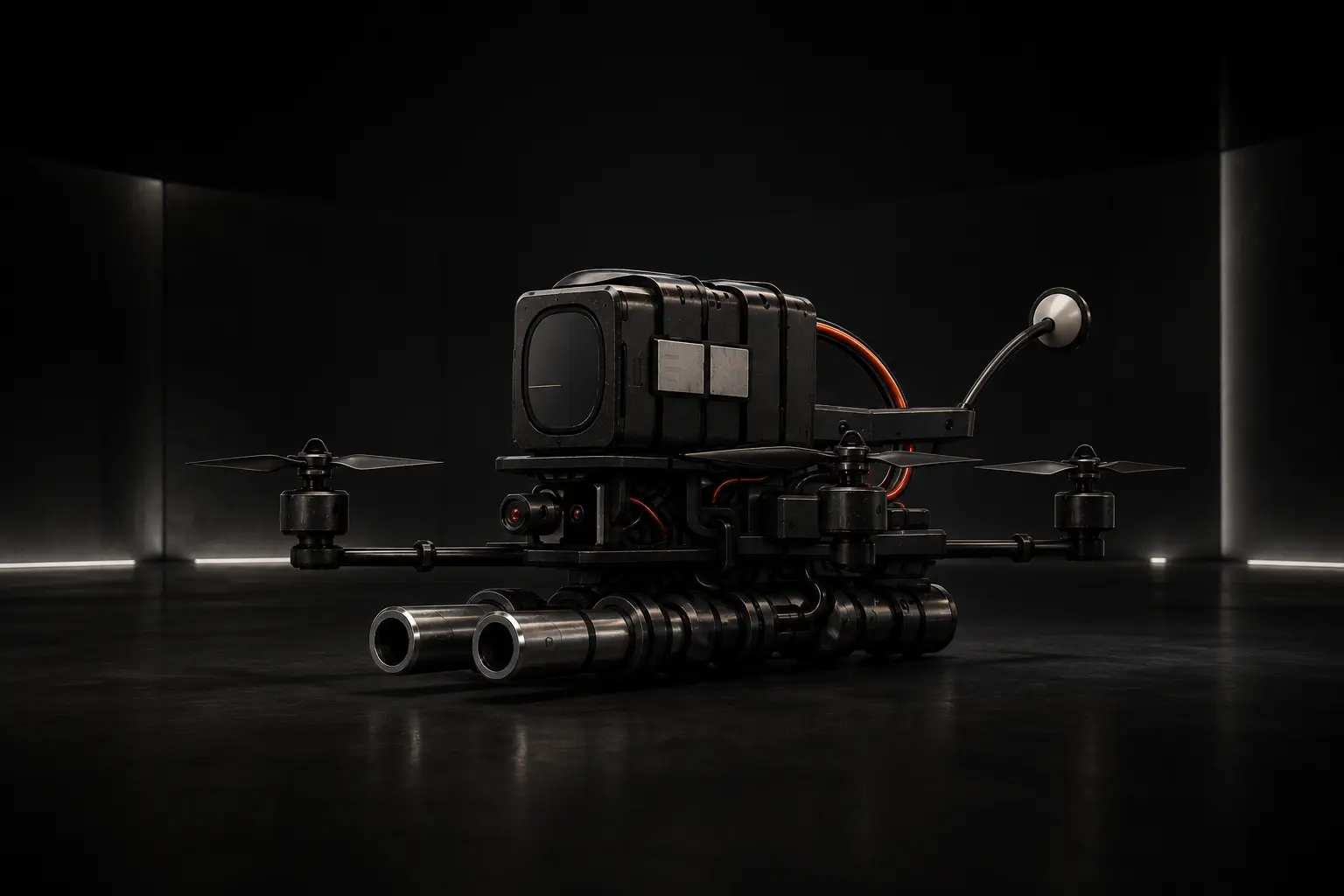
S.T.R.A.P.-1
Compact Fixed-Wing Concept
- Compact fixed-wing UAV concept
- High-speed aerodynamic design
- Lightweight modular payload area
- Multi-camera sensor support
- Assisted navigation system
- Launch-ready configuration for varied surfaces
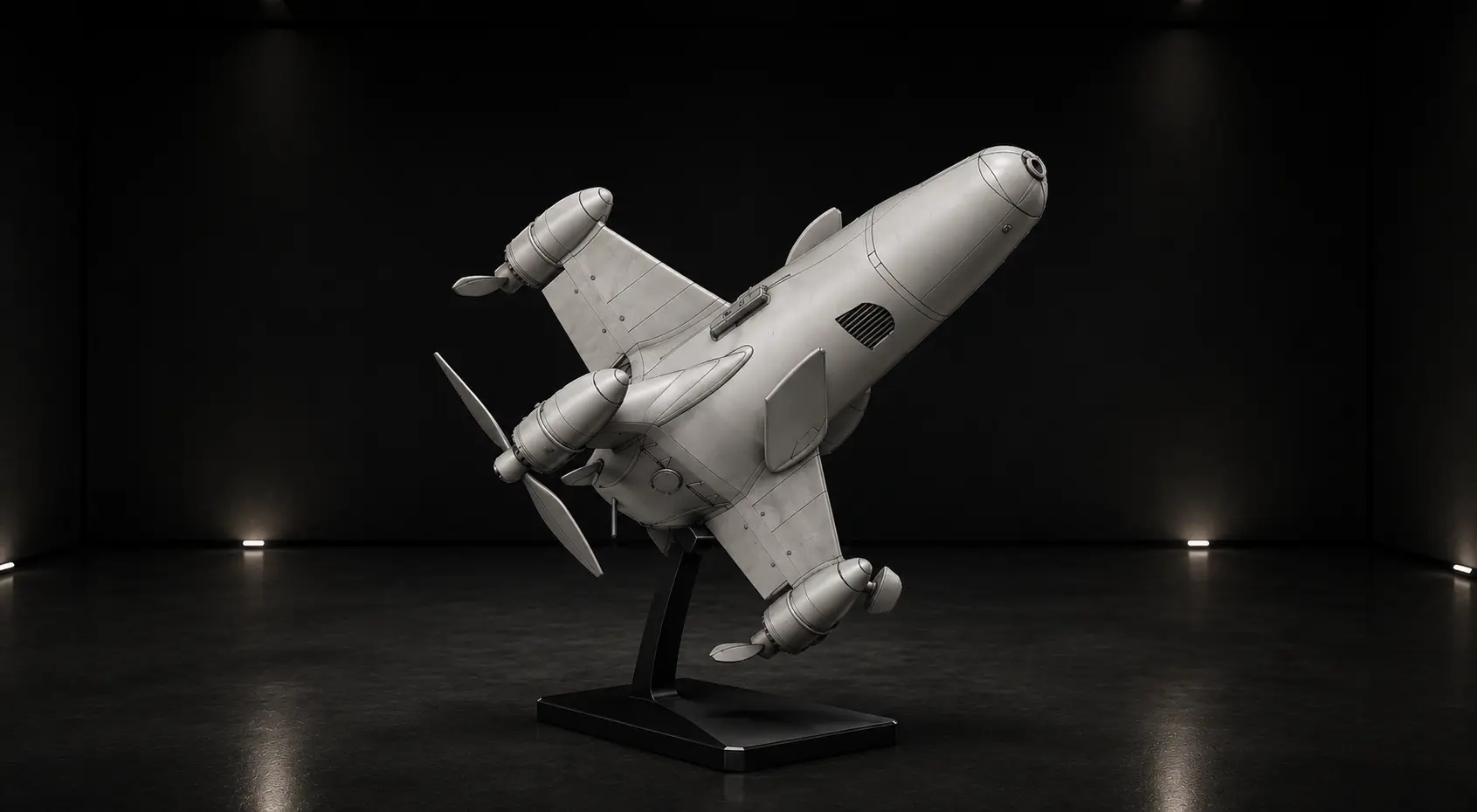
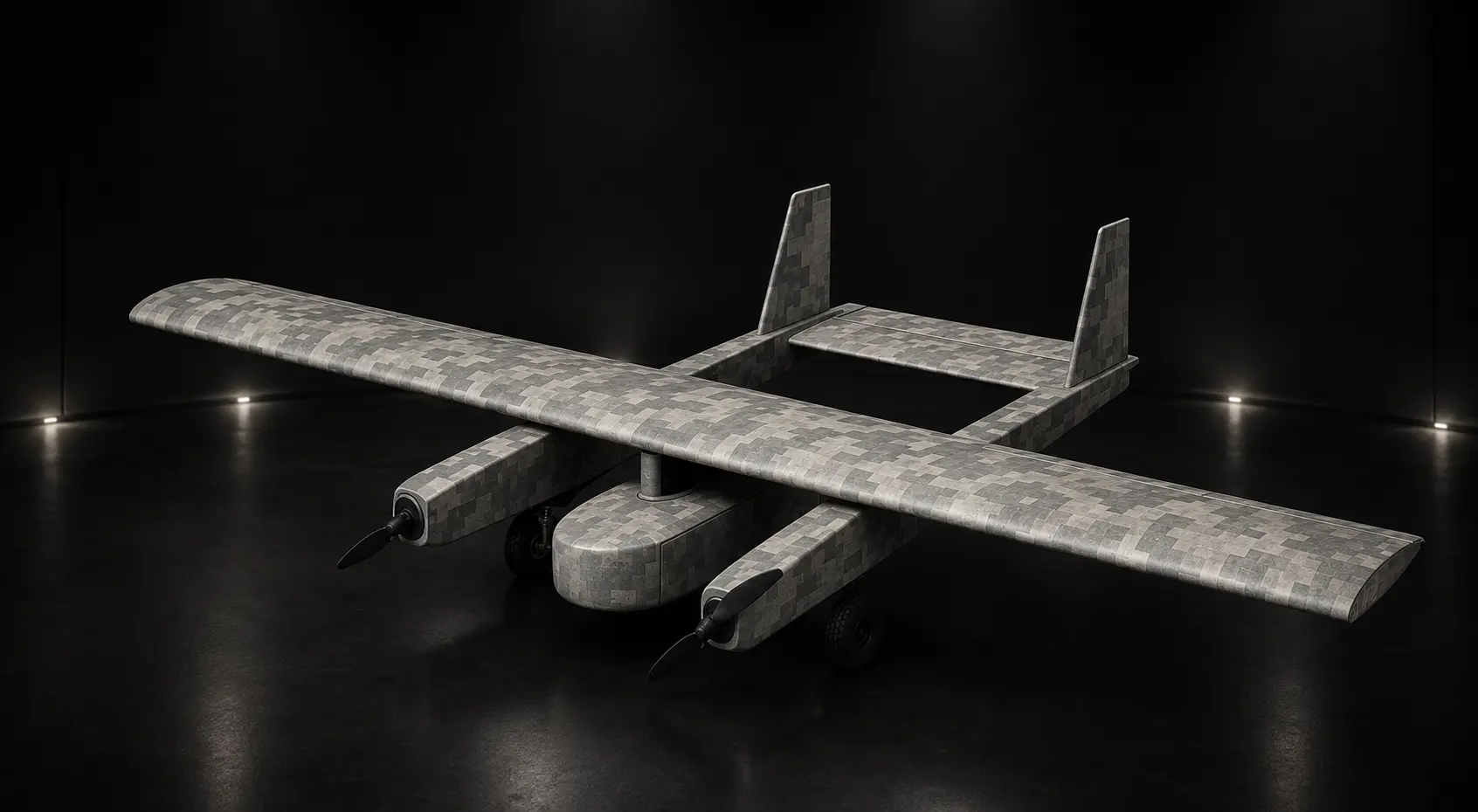
STORMBIRD
Long-Range Fixed-Wing Concept
- Long-range fixed-wing UAV concept
- Modular payload capacity
- Extended communication support
- RF, LTE, and fiber-optic control compatibility
- Efficient flight profile
- Automated navigation support
DRONEBREAKER
Compact Research Platform Concept
- Compact multirotor UAV concept
- Modular front-mounted system design
- Multi-sensor configuration
- Automated navigation support
- Designed as a technology concept for advanced UAV research
STORMSTRIKE
Long-Range Platform Concept
- Long-range UAV platform concept
- Modular payload area
- Extended range configuration
- RF, LTE, and fiber-optic control compatibility
- Automated navigation support
- Launch capability from unprepared surfaces
R&D Concept
Hydrogen, 6-8h Endurance, Starlink
Hydrogen, 6-8h Endurance, Starlink
01Extended Range RPAS
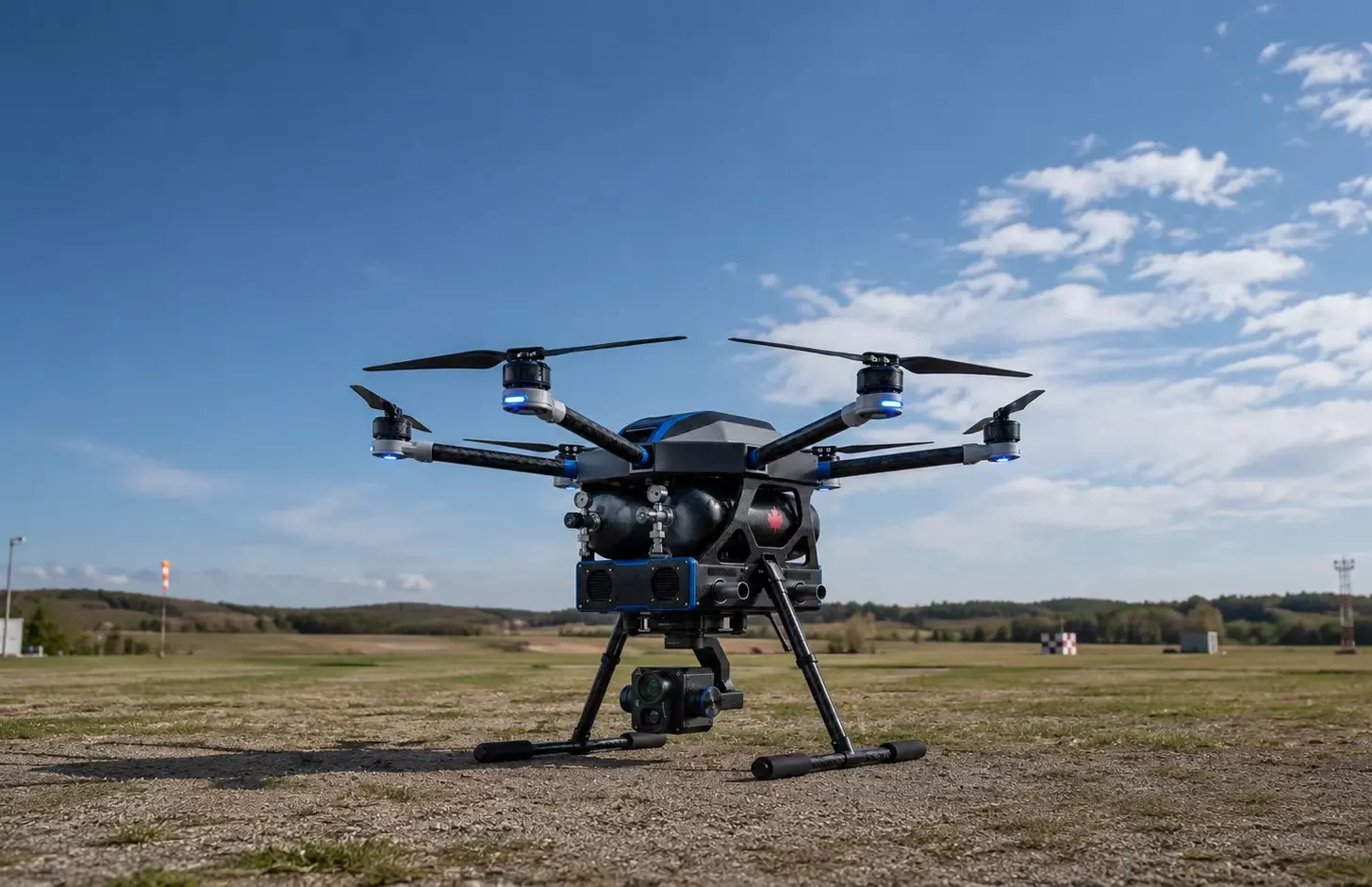
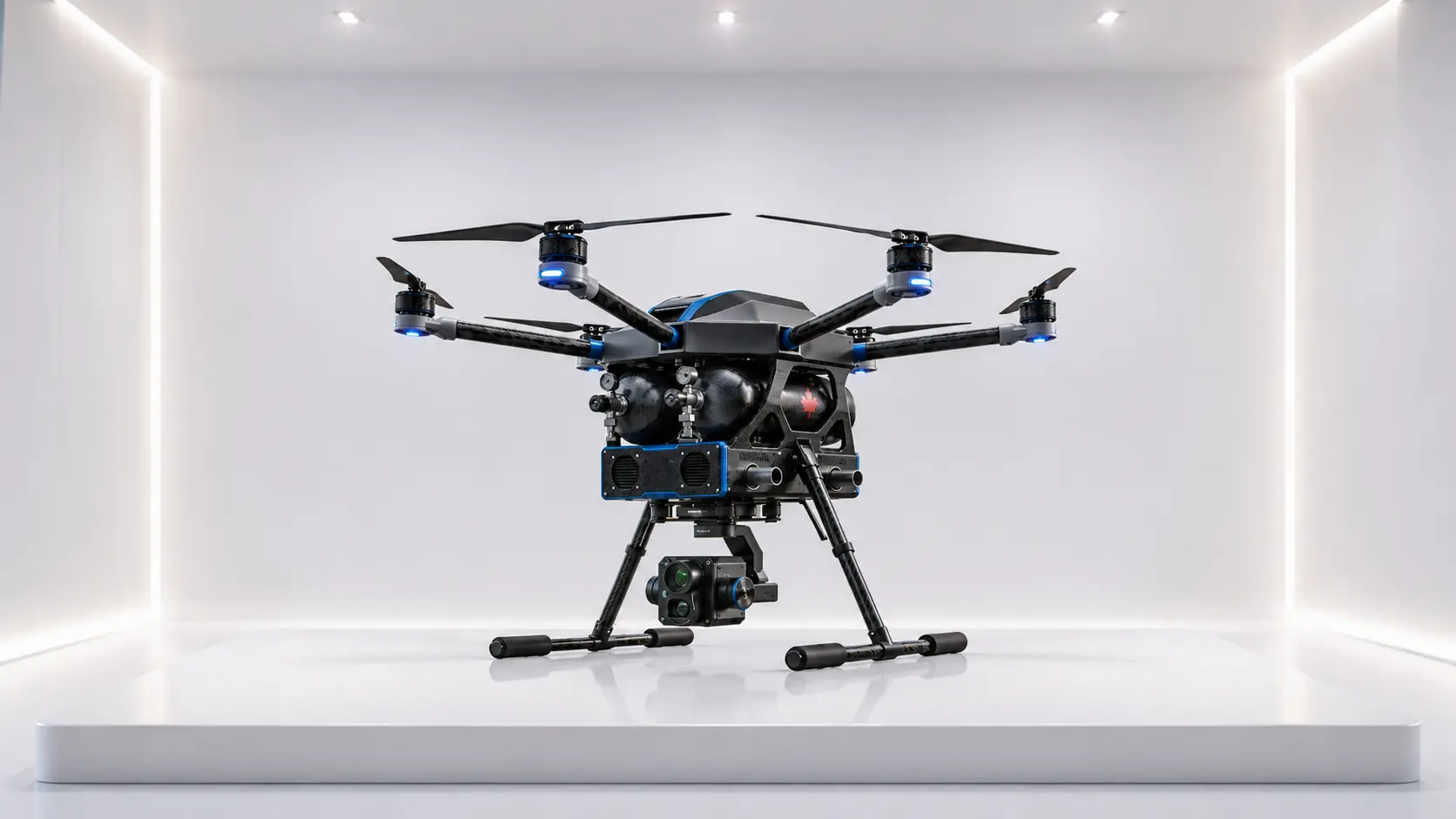
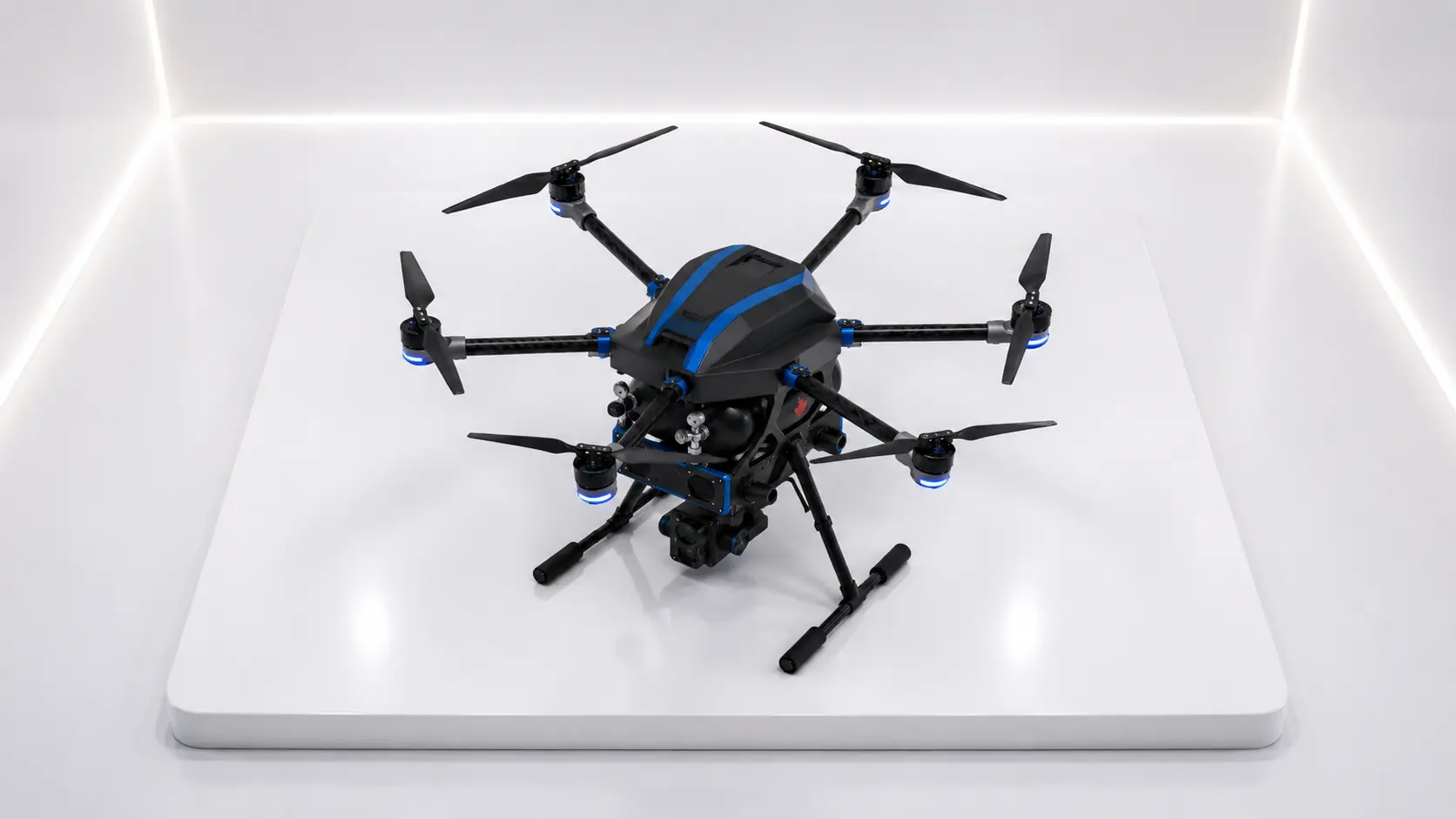
Hydrogen-Powered Hexacopter
Currently in the feasibility study phase, this drone concept aims to push the boundaries of UAV technology by integrating advanced hydrogen fuel cell propulsion, ultra-lightweight design, and AI-enabled surveillance capabilities.
The challenge
Monitoring Canada’s hardest-to-reach areas
Rural, remote, and border regions across Canada are difficult to monitor with traditional methods. Long distances, limited infrastructure, sensitive wildlife areas, and the need for rapid response create major operational challenges. These environments require aerial systems that can cover more ground, operate quietly, reduce environmental impact, and support missions such as natural resource monitoring, border patrol, surveillance, and emergency response.
Our solution
A long-endurance hydrogen UAV built for remote operations
Weighing just under 50 kg, this hydrogen-powered hexacopter is designed for extended flight times, minimal noise, and zero-emission performance. Its long range supports continuous monitoring of natural resources, environmental conditions, and remote border areas, while quiet operation makes it suitable for wildlife observation and surveillance missions. With rapid deployment and AI-enabled capabilities, it can provide immediate aerial support when critical situations demand fast visibility from above.
Key features
Revolutionizing UAV Operations.
01
Ultra-Lightweight Design
Weighing just under 50 kg, our drone is lighter than any other UAV with comparable capabilities, enhancing maneuverability and ease of deployment.
02
Long-Lasting Performance
Achieves a flight duration exceeding 6-8 hours, significantly surpassing the industry standard of 55 minutes.
03
AI-Enabled Capabilities
Equipped with AI-powered sensors and cameras for superior data acquisition and processing..
Specifications
Full Technical Breakdown
Designed for long-endurance and remote operations, the Extended-Range RPAS combines hydrogen-electric propulsion, modular payload architecture, and autonomous flight capabilities to deliver reliable performance in demanding environments, including arctic and all-weather conditions.
Physical Specifications
Total Takeoff Weight21.32 kg MTOW
Frame3.00 kg
Fuel CellH3D Aerocell A4000 · 6.00 kg
Hydrogen Tanks5.60 kg total · 2.80 kg × 2
Battery Buffer1.20 kg
Propulsion Motors2.10 kg total · 0.35 kg × 6 motors
Electronics & Payload3.42 kg · includes Starlink, heating, sensors, and 1.00 kg payload
Power & Energy System
Primary Power Source1× H3D Aerocell A4000 Fuel Cell
Nominal Power4000 W
Energy Storage1.68 kg hydrogen
Real Energy Density16,650 Wh/kg
Propulsion Draw2816.64 W · hover/cruise
Electronics Draw410 W · avionics, Starlink, and heat
Payload Draw100 W
Total Continuous Draw3326.64 W
Propulsion Requirements
Motor ModelVertiq 81-08 G2 · 240 KV
Propellers22 × 6.6R · 22-inch
Required Thrust≈ 3.55 kg per motor
Motor Count6 motors
Performance Capabilities
Flight Endurance8.41 hours
Cruise Speed79.06 km/h · 21.96 m/s
Maximum Speed104.81 km/h · 29.11 m/s
Total Flight Range664.75 km
Hydrogen Consumption199.80 g/hour
Total Max Thrust73.62 kg · 12.27 kg per motor
Max T/W Ratio≈ 3.45:1
Field Testing Class I, Small (NATO)
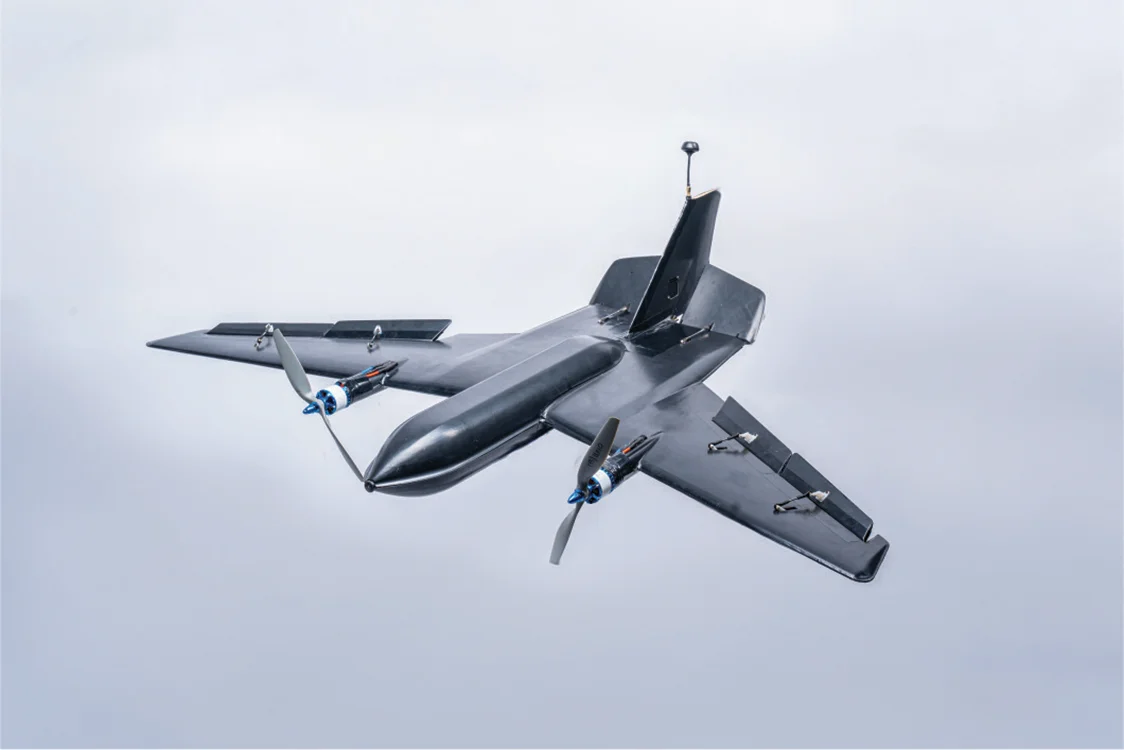
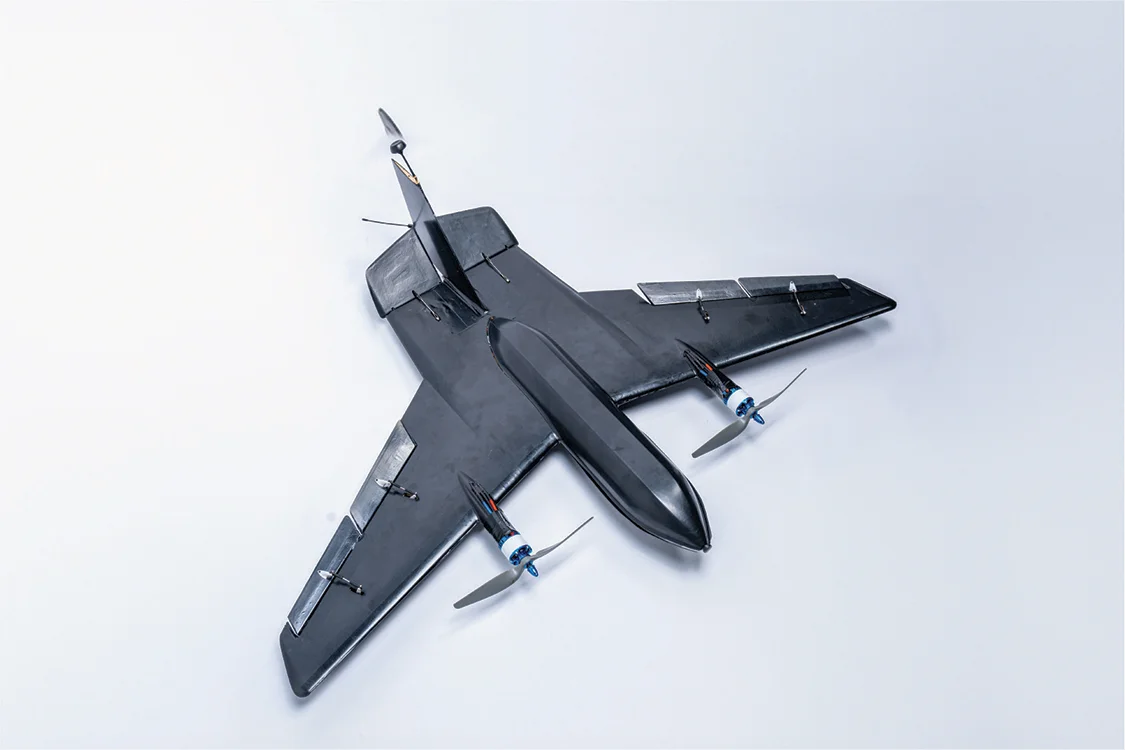
02Bird of Prey
Attritable UAV Interceptor
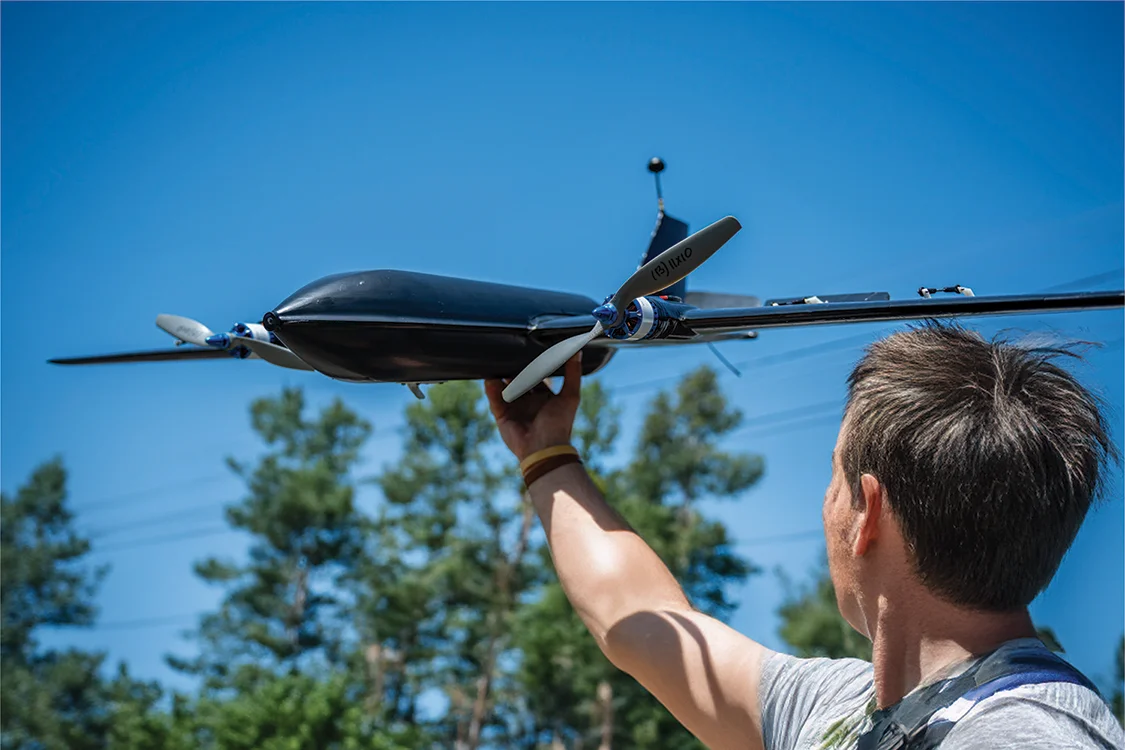
Engineered for speed, agility, and rapid-deployment counter-UAS operations. Built on a proprietary aerodynamic platform with a modular payload system.
The challenge
Demand for low-cost, modular interception.
The increasing use of unmanned aerial systems in reconnaissance and strike roles has created sustained demand for low-cost, modular, and reliable interception solutions. Operators need systems that combine rapid deployment, operational flexibility, and high reusability — while remaining affordable enough to be used at the scale modern operations require.
Our solution
A Class I attritable platform, in field testing.
The Bird of Prey (BOP) is a Class I, Small UAV interceptor — attritable by design, currently in advanced stages of field testing. The platform combines a proprietary aerodynamic airframe with a modular payload bay and reconfigurable electronics suite, allowing rapid setup for both kinetic and non-kinetic missions including RF countermeasures and surveillance.
Key features
Engineered Systems, Modular by Design.
01
Aerodynamic Airframe
A reverse-sweep wing configuration delivers stability at high speed and control at low speed, supporting both interception precision and pre-engagement loitering.
02
Camera & Video Signal
Low-light camera produces high-quality imagery in evening conditions. Supports standard channels with 4 additional configurable channels in the 6010–6080 MHz range, with optional video scrambling.
03
Communication
Dual-channel board enables in-flight frequency switching across 433–490 MHz / 850–950 MHz, with upgrade options for AES-256 encrypted multi-band operation (2.4 / 5.8 GHz, L/S/Ku-band, satellite).
04
Arming Initiation Board
Custom safety logic arms payload only after confirmed target acquisition. Reduces risk of accidental activation and supports safe recovery if a mission is aborted.
Specifications
Full Technical Breakdown
Currently in the feasibility study phase, this drone concept aims to push the boundaries of UAV technology by integrating advanced hydrogen fuel cell propulsion, ultra-lightweight design, and AI-enabled surveillance capabilities.
Platform
ClassClass I, Small (NATO)
AirframeFixed-wing; proprietary aero design
PropulsionTwin electric motors (BLDC)
Deployment<5 min single-operator
ReusabilityRecoverable if not detonated
Performance
Cruise Speed150–165 km/h
Pursuit200 km/h (10–15 min)
BurstUp to 325 km/h (3–5 s)
Min. Controlled≈20 km/h
Endurance40–60 min
CeilingUp to 6,000 m AGL
Range50–120 km
Payload & Sensors
Capacity1–4 kg
Kinetic1–3 kg TNT eq.
OpticsDay camera; thermal/LiDAR dev.
ModularityRapid mission reconfig
Targeting & Safety
GuidanceGPS/INS; visual homing
AutonomySemi-auto + manual override
ArmingProximity ≤3 m; safe recovery
Communications
Baseline433–490 / 850–950 MHz
UpgradeAES-256 2.4/5.8 GHz; L/S/Ku; sat
C2CUAS feed integration
Compliance
StandardsSTANAG 4586; Transport Canada RPAS
Training<2 days
Cost~$7,000 CAD base
Cost and Perfomance
Bird of Prey in Comparison
Model
Ceiling
Range
Max Speed
Endurance
Payload
Cost (CAD)
Bird of Prey (BOP)
6 km
50–120 km
325 km/h
40 min
1–3 kg
$7K
Switchblade 300
0.15 km
10 km
160 km/h
15 min
0.5 kg
$10K
Hero-30
5.5 km
20 km
185 km/h
30 min
0.5 kg
N/A
Warmate
3 km
30 km
120 km/h
60 min
1.5 kg
$45K
Switchblade 600
3.5 km
40 km
180 km/h
40 min
2.5 kg
$80K
Public-domain specifications for comparable Class I and loitering munition systems.
Start the conversation
Let’s Build What’s Next.
Planning a new research initiative, modernizing an existing system, or exploring a long-term technology partnership? We’d be glad to connect and learn more about your goals.